
Before You Start: Confirm Who Handles Disconnection
Many moving companies move appliances but don’t disconnect or reconnect them, and almost none handle gas or plumbing hookups. Ask your mover before move day whether the crew will disconnect and reconnect the machines or whether you need to have them ready to roll. A gas dryer should be disconnected by a licensed professional, since the gas line must be shut off and capped correctly.
How to Prepare the Washer
- Turn off both water supply valves and unplug the washer.
- Disconnect the hot and cold inlet hoses, holding them over a bucket or towel, since water remains inside.
- Drain the drain hose and any water left in the drum or pump, using a shallow pan and a towel for the small amount left in the filter area.
- Install the transit bolts, also called shipping bolts, if your model has them. These lock the drum in place, and most front-load washers and many top-load models require them. If the originals are lost, order replacements from the manufacturer using the model number.
- Coil the power cord and hoses, then tape them to the back or side of the machine with painter’s tape so nothing drags or catches.
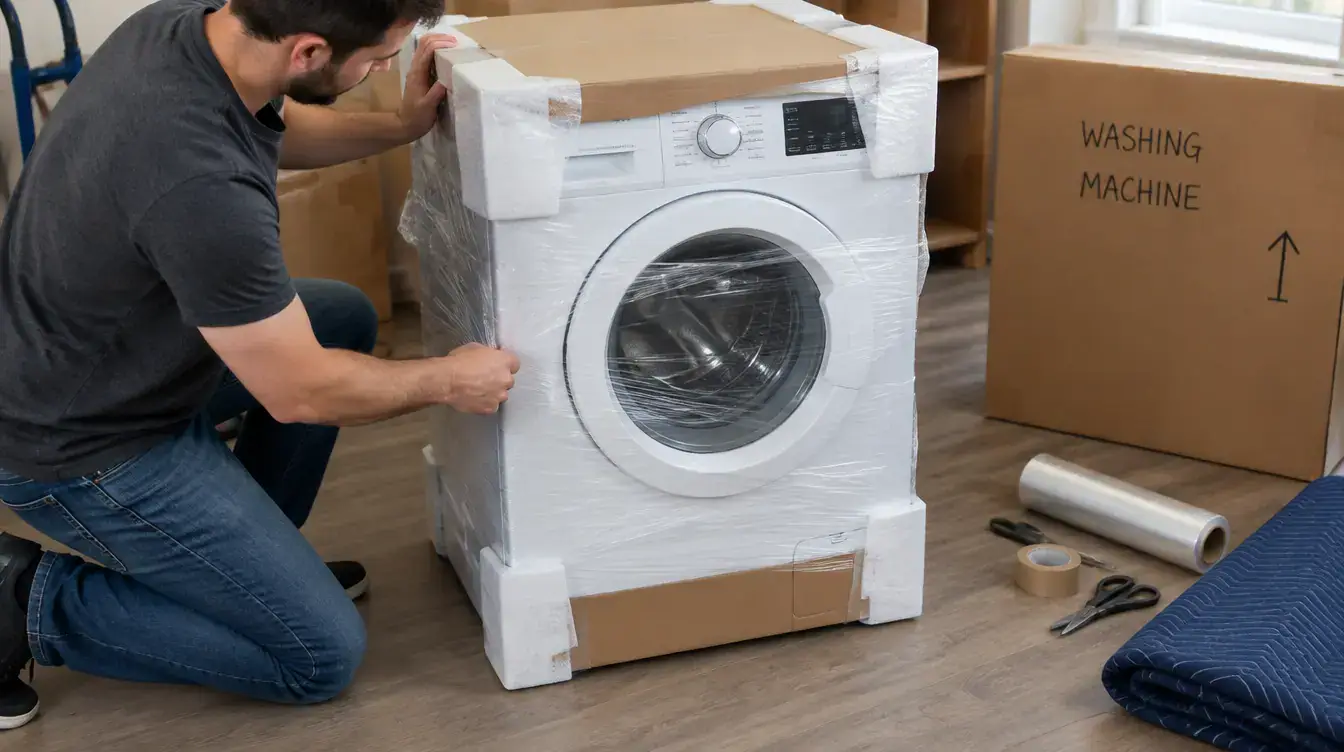
- Tape the door or lid shut with painter’s tape, which won’t leave adhesive residue on the finish.
How to Prepare the Dryer
- Unplug the dryer. For a gas dryer, have a licensed professional shut off and cap the gas line first.
- Disconnect the vent duct from the back of the machine and set it aside to be packed in a box.
- Clean the lint trap and vacuum lint from the vent opening, which reduces fire risk at the new home.
- Raise the leveling feet so they don’t catch on thresholds or snag during moving.
- Tape the cord to the back of the machine and tape the door closed.
Dry Out Both Machines Before the Move
Leave the washer door or lid open for at least 24 hours after draining so the drum and gasket dry completely. Trapped moisture in a closed machine, particularly in Portland’s humid, rainy months, encourages mildew and odors that show up once the machine is running again. Close and tape the door only right before loading.
Moving Day: Handling and Transport
- Use an appliance dolly with a strap, and keep both machines upright. Tilting a washer sharply can shift internal components, even with transit bolts installed.
- Plan for at least two people, and more if the machines go up or down stairs, which is common with basement laundry rooms in older Portland homes.
- Protect floors and doorframes with sliding pads or cardboard along the path.
- Load the machines upright in the truck, against a wall, and strap them so they can’t shift during transport.
- Keep the hoses, vent duct, and transit bolt hardware in a labeled bag taped to the machine or placed in a “first unpack” box.
Setting Up at the New Home
Remove the transit bolts from the washer before running it, since a locked drum will shake violently during a spin cycle. Level the machines using the adjustable feet, reconnect the hoses and check the connections for leaks with a short empty cycle, and attach the dryer vent duct firmly before running a load. Let the washer sit upright for an hour or so before use if it was moved on a hand truck at an angle.
What to Avoid
- Moving a washer without securing the drum, which can damage the suspension and shock absorbers.
- Leaving water in the hoses or drum, which leaks onto the truck floor and other belongings.
- Disconnecting a gas dryer yourself without a licensed professional.
- Laying either machine on its side or back for the move.
- Using packing tape on finished surfaces, which can pull paint or leave residue.
Frequently Asked Questions
Do movers disconnect and reconnect washers and dryers?
It depends on the company. Many movers move appliances but don’t handle plumbing or gas hookups, so confirm with your mover before move day.
What are transit bolts on a washer, and do I need them?
Transit bolts lock the washer drum in place so it can’t move during transport. Most front-load washers and many top-load models need them, and replacements can be ordered from the manufacturer by model number.
Can I move a washer and dryer on their sides?
No. Both machines should stay upright, since tipping can shift internal components or damage the drum suspension.
How long should a washer dry out before a move?
Leave the door or lid open for at least 24 hours after draining so the drum and gasket dry fully, which helps prevent mildew and odors.